3
Writing
Using marks, symbol systems, alphabets, and syllabaries to communicate across time and cultures.
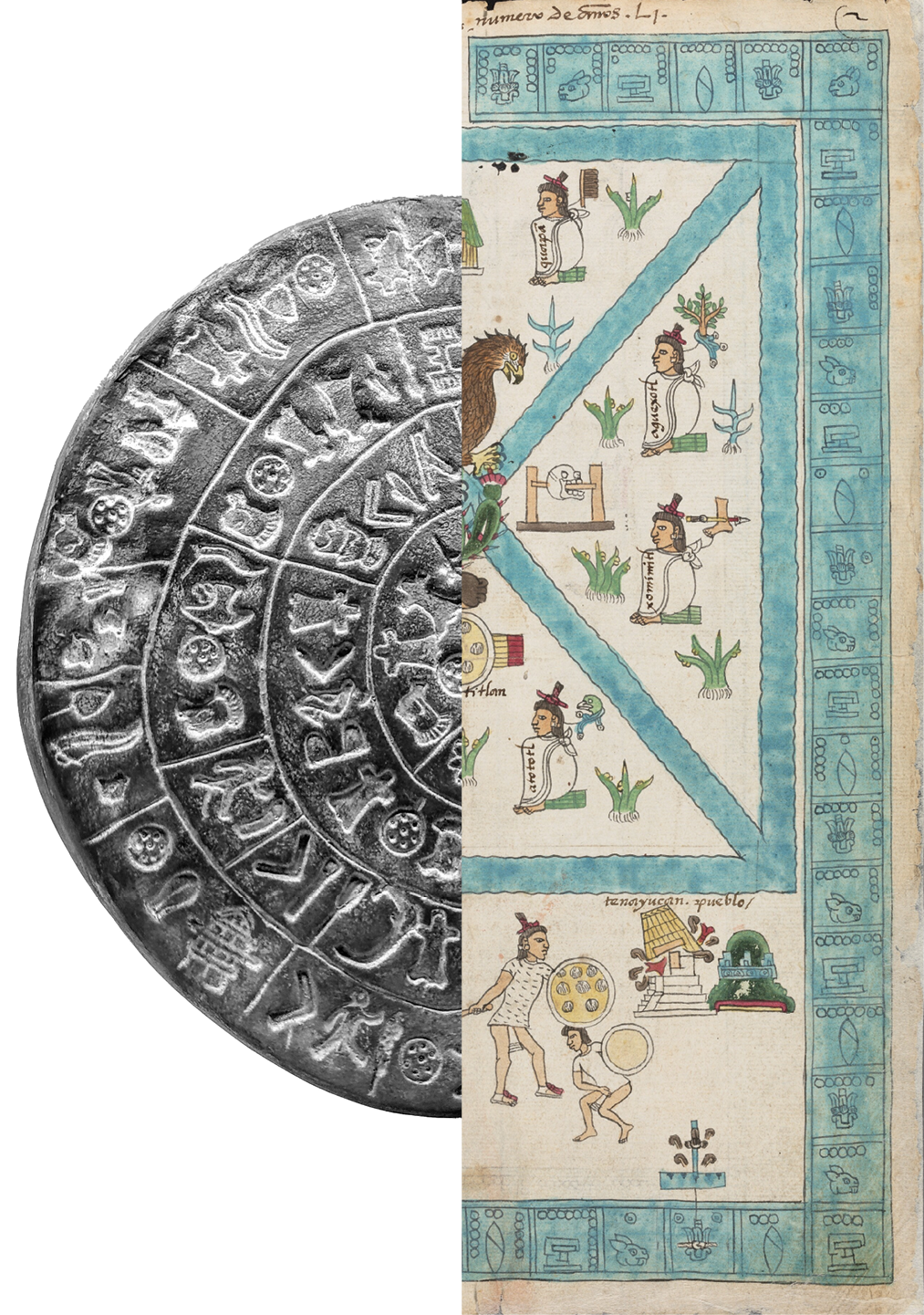
Writing systems are based on the structure of spoken language, the needs of their users, the tools and materials available to them, and the spread of knowledge across cultures. Writing was invented as people developed marks and pictures to represent verbal language—at first on rocks and in caves—and evolved with the need for efficiency and to express a broader range of ideas. Early visual language systems were complex, including hundreds of signs and symbols that required long, hard study to master. The number of individuals who were literate in early cultures was thus quite small, and their access to knowledge gave them great power. Eventually these complex systems were replaced by more easily learned elementary signs driven by the search for simpler and faster ways to construct and write letters with the materials at hand. This led to vastly different types of alphabets and writing systems.
Topics
- Prehistoric visual communications
- Early writing in Mesopotamia
- Egyptian hieroglyphs
- Cretan pictographs
- The North Semitic (Phoenician) alphabet
- The Aramaic alphabet and its descendants
- The Greek alphabet
- The Latin alphabet
- Early writing in Mesoamerica
- Chinese scripts
- Chinese script styles
- The Korean alphabet
- African writing systems
- Cherokee syllabary