9
Explaining
Using design to document, teach, or inform via illustrated books, maps, infographics exhibitions, interactive media, and visual journalism.
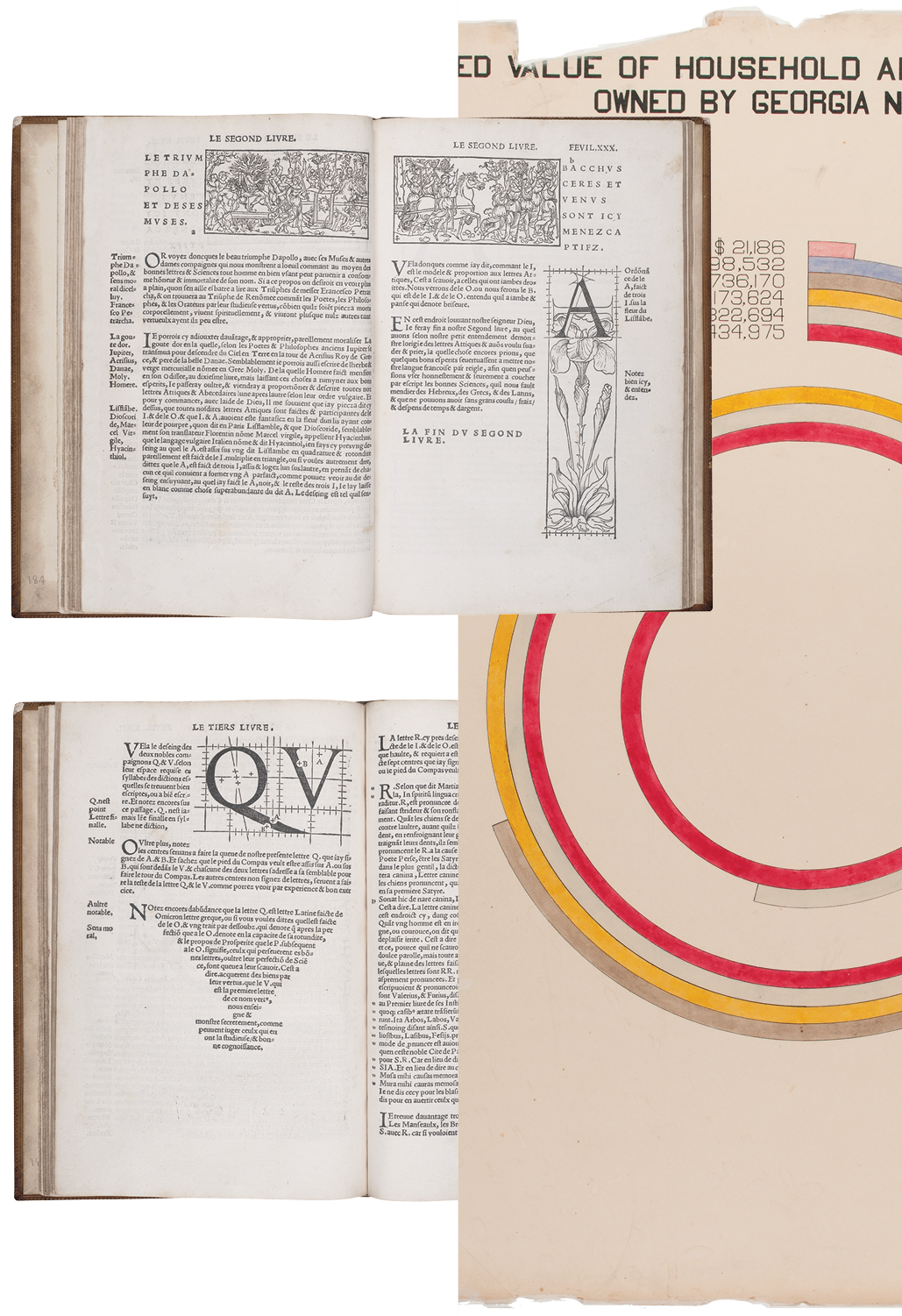
Graphic design can improve accessibility, help viewers retain information and ideas, and foster informed decision-making. Books, maps, charts, graphs, and interactive experiences have been used throughout history to explain, teach, and orient people to new ideas. In these projects, graphic designers aim for both legibility and aesthetics, paying critical attention to the user, the environment, and the nature of the information. Expert use of typography, visual metaphors, abstract representations, and storytelling are powerful ways to make ideas resonate. Sometimes, a simple solution is best, other times a complex approach enriches an explanation. In the history of visual communication, designers have proven invaluable in bridging the gap between content experts and the audiences they hope to reach.
Topics
- Early illustrated books
- The German illustrated book
- The Renaissance—innovations in book design
- Victorian children’s books
- The rise of infographics
- Pictographic histories
- Informational graphics at mid-century
- Information architecture
- Visual storytelling